
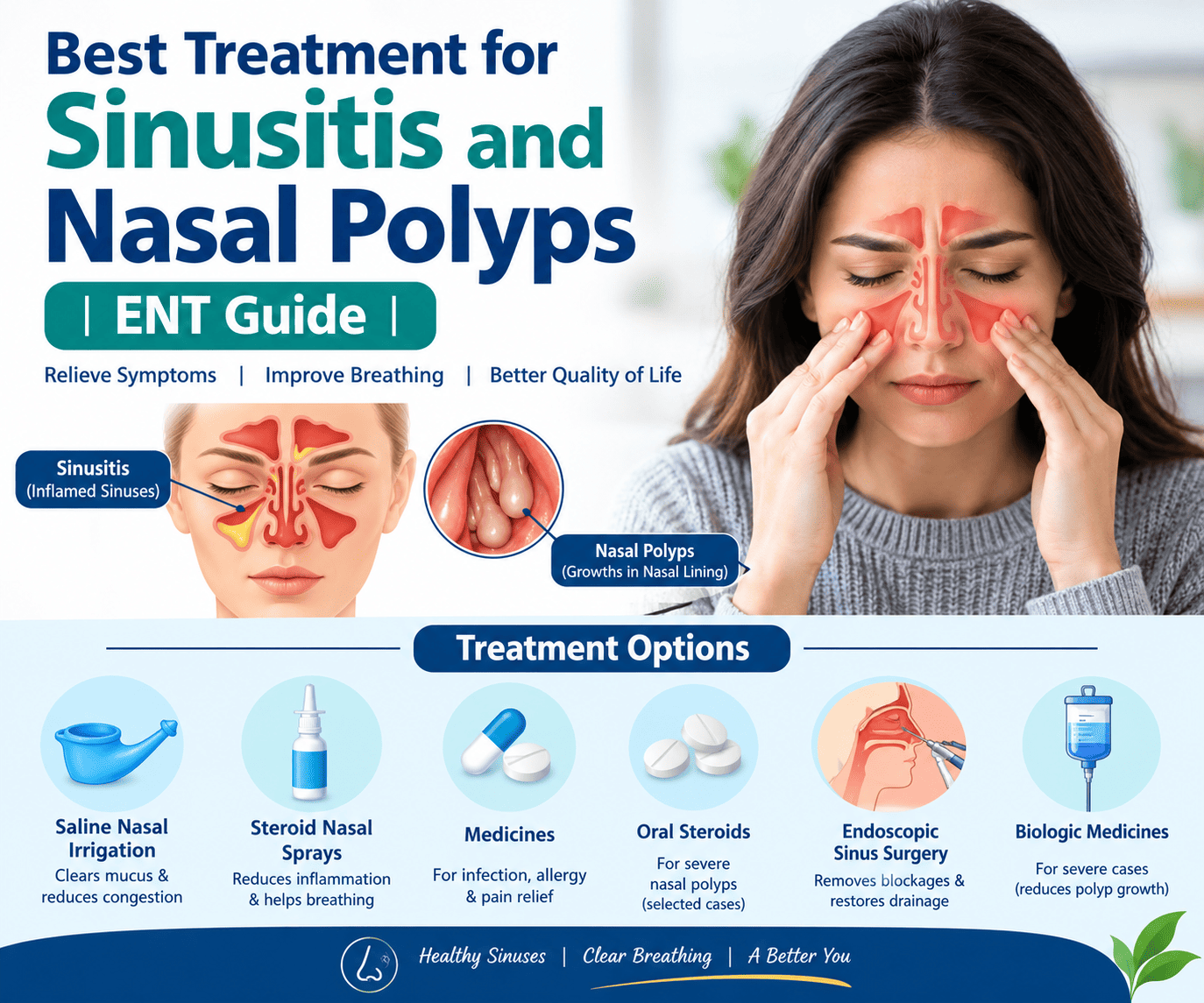
Sinusitis and nasal polyps are common ENT problems that can affect breathing, sleep, smell, and overall quality of life. People with these conditions may experience a blocked nose, facial pressure, headaches, thick nasal discharge, or difficulty breathing through the nose. When symptoms continue for weeks or keep returning, everyday activities can become uncomfortable.
The good news is that several treatment options are available. The right approach depends on the cause of the symptoms, the severity of inflammation, the presence of nasal polyps, and the patient’s medical history. An ENT specialist can assess the condition and recommend suitable treatment.
What Is Sinusitis?
Sinusitis occurs when the lining of the sinuses becomes inflamed and swollen. The sinuses are air-filled spaces around the nose, cheeks, forehead, and eyes. Inflammation can interfere with normal mucus drainage and cause congestion and facial discomfort.
Sinusitis may develop after a viral infection, while allergies and other factors can contribute to persistent inflammation. Acute sinusitis generally lasts for a shorter period, whereas chronic sinusitis continues for at least 12 weeks.
Common symptoms include:
- Blocked or stuffy nose
- Facial pain, pressure, or fullness
- Thick nasal discharge
- Reduced sense of smell
- Mucus dripping down the back of the throat
- Headache or pressure around the forehead and cheeks
Symptoms vary from person to person, so persistent problems should be evaluated by a healthcare professional.
What Are Nasal Polyps?
Nasal polyps are soft, usually painless growths that develop in the lining of the nose or sinuses. They are associated with long-term inflammation and may occur alongside chronic rhinosinusitis.
Small polyps may cause few symptoms. Larger or multiple polyps can block nasal passages and interfere with normal airflow and sinus drainage.
Common symptoms of nasal polyps include:
- Persistent nasal blockage
- Reduced or lost sense of smell
- Runny nose and postnasal drip
- Difficulty breathing through the nose
- Snoring or disturbed sleep
- Recurrent sinus symptoms
Sinusitis and nasal polyps can occur together, but they are not the same condition. Identifying whether polyps are present helps an ENT specialist plan appropriate treatment.
Best Treatment Options for Sinusitis and Nasal Polyps
Treatment depends on whether the condition is acute or chronic and whether nasal polyps are present. Current clinical guidance supports saline nasal irrigation and intranasal corticosteroids for symptom relief in chronic rhinosinusitis. Source: American Academy of Otolaryngology–Head and Neck Surgery Foundation.
1. Saline Nasal Irrigation
Saline nasal irrigation helps wash mucus, allergens, and other irritants out of the nasal passages. It may reduce congestion and improve comfort in people with chronic sinusitis.
Use sterile or distilled water, or water that has been boiled and cooled, when preparing a nasal rinse. Clean the irrigation device according to its instructions. Ask an ENT specialist for guidance if you are unsure which method is suitable.
2. Steroid Nasal Sprays
Intranasal corticosteroid sprays reduce inflammation inside the nose. They are commonly used to manage chronic sinusitis and nasal polyps. Regular use as directed may help improve nasal blockage and, in some patients, the sense of smell.
These sprays may take time to provide noticeable relief. Correct technique and consistent use are important. A healthcare professional can explain how to use the spray and whether it is appropriate for your symptoms.
3. Medicines for Sinusitis
An ENT specialist may recommend additional medicines depending on the cause and severity of the condition.
Antihistamines may help when allergies contribute to symptoms. Pain relievers may be suitable for facial discomfort or headaches, depending on a person’s medical history.
Antibiotics are not needed for every case of sinusitis because many infections are caused by viruses. They may be considered when bacterial sinusitis is diagnosed. Do not take antibiotics or oral steroid tablets without appropriate medical advice.
4. Oral Steroids for Selected Patients
For some patients with significant nasal polyps, a doctor may prescribe a short course of oral corticosteroids to reduce swelling and improve airflow. These medicines can have important side effects, particularly with repeated or prolonged use.
They are not suitable for everyone and should only be used under medical supervision.
5. Endoscopic Sinus Surgery
When symptoms remain troublesome despite appropriate medical treatment, an ENT surgeon may consider functional endoscopic sinus surgery (FESS).
During this procedure, the surgeon uses an endoscope to examine the nasal passages and sinuses. Surgical instruments are used to open blocked drainage pathways and remove obstructing tissue or polyps when indicated.
Potential benefits include improved sinus drainage, better nasal airflow, and easier delivery of topical medicines. Surgery is not necessary for every patient, and symptoms or polyps can return after treatment. Continued medical care may therefore be needed.
6. Biologic Medicines for Severe Nasal Polyps
Biologic medicines are targeted treatments that may be considered for selected adults with severe chronic rhinosinusitis and nasal polyps. They may be an option when standard medical and surgical treatments have not worked adequately, or when surgery is unsuitable.
An ENT specialist may discuss the potential benefits, risks, eligibility criteria, and cost of these medicines. They are not routinely needed for every patient with sinusitis.
When Should You Visit an ENT Specialist?
Consider consulting an ENT specialist if nasal blockage persists, your sense of smell decreases, sinus symptoms repeatedly return, or treatment has not provided adequate relief.
A specialist may examine the nose using nasal endoscopy. A CT scan may be recommended when clinically indicated, particularly when chronic sinus disease or surgery is being assessed. Allergy evaluation may also be useful in selected cases.
Seek urgent medical attention if sinus symptoms are accompanied by swelling or redness around the eye, changes in vision, severe or rapidly worsening headache, confusion, or other serious symptoms.
How Can You Reduce the Risk of Recurring Sinus Problems?
Although sinusitis and nasal polyps cannot always be prevented, certain measures may help control symptoms:
- Follow the treatment plan recommended by your ENT specialist.
- Use saline rinses safely and keep the equipment clean.
- Avoid cigarette smoke and other known nasal irritants.
- Manage diagnosed allergies and asthma.
- Use prescribed nasal sprays regularly as directed.
- Attend follow-up appointments, particularly after surgery or when symptoms return.
Nasal polyps may recur even after successful treatment, so long-term monitoring can be important.
Conclusion
The best treatment for sinusitis and nasal polyps depends on the underlying cause, severity, and response to treatment. Saline irrigation and steroid nasal sprays are common first-line options for chronic symptoms. Selected patients may benefit from additional medicines, biologic treatments, or endoscopic sinus surgery.
If you have persistent nasal blockage, facial pressure, reduced smell, or repeated sinus infections, consult an ENT specialist for an accurate diagnosis and an individual treatment plan. Early assessment can help identify the cause of your symptoms and guide appropriate care.
Frequently Asked Questions
1. What is the best treatment for sinusitis and nasal polyps?
Treatment may include saline irrigation, steroid nasal sprays, selected medicines, biologic therapy, or surgery, depending on the diagnosis and severity.
2. Can nasal polyps disappear with medicine?
Medicines, particularly steroid nasal sprays, can reduce inflammation and shrink polyps in some patients. Surgery may be considered when symptoms remain troublesome despite appropriate medical treatment.
3. Is sinus surgery necessary for everyone with nasal polyps?
No. Many patients begin with medical treatment. Surgery is considered when symptoms and obstruction do not respond adequately or when the clinical situation warrants it.
4. Can nasal polyps grow back after surgery?
Yes. Nasal polyps can recur after surgery. Ongoing treatment and follow-up may help control inflammation and reduce the risk of early recurrence.
5. When should I consult an ENT doctor for sinusitis?
Seek an assessment if symptoms persist, repeatedly return, affect your sense of smell, or do not improve with appropriate treatment.
Medical disclaimer: This article is for general educational purposes and does not replace an individual medical assessment. Diagnosis and treatment should be guided by a qualified healthcare professional.